The Government of Uttar Pradesh has proposed a new draft Unified Building Code that could significantly alter construction regulations in Noida, Greater Noida, the Yamuna Expressway region, and other industrial development areas. Until now, each authority operated under its own distinct set of rules. The objective of this new draft Unified Building Code is to establish a comprehensive framework designed to expedite the approval process and streamline the overall development workflow. This sweeping change is expected to have its most profound impact on the property development sector.
Under the current system, developers face difficulties, as they are required to follow regulations across different regions like Noida, Greater Noida, and the Yamuna Expressway. This situation leads to a delay in the approval and results in increased project cost. The new Framework tried to simplify these issues, thereby bringing both speed and clarity to the property development process.
FAR means Floor Area Ratio, which represents a major change. It determines the maximum built-up area that can be constructed on a given plot. Until now, the FAR was fixed and, to a significant extent, dependent on the decisions of the governing authorities. The new regulations have now been introduced, under which the FAR has been directly linked to the road width. This means that the wider the road, the greater the extent of permissible construction. This has been adopted with future urban planning in mind and will help in property development.
According to the current norms, the permissible limit ranges from 0.6 to 2 for industrial plots, 2.75 to 3.5 for Group Housing, 0.8 to 2.75 for institutional projects, and 1.2 to 4 for commercial projects. And, under the new draft, these limits have been increased. According to the new rules, for industrial plots situated on roads ranging from 12 to 24 meters in width, the FAR will be set at 3. This figure may also increase to as much as 6 if the road width exceeds 24 meters. In such cases, while the base FAR remains at 3, the cap on the FAR is removed. Similarly, for Group Housing projects, the base FAR has been set at 3.5, which depends on the road width and could rise to 7, 10.5, or even higher. The direct implication is that, in the near future, the trend of constructing high- rise buildings is set to increase.
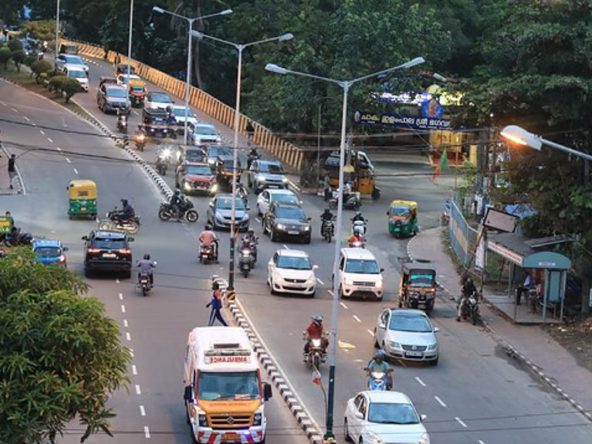
Wider roads are capable of handling a greater volume of traffic and population than narrower ones. High-density construction is both feasible and permitted in such areas. Developing high- density projects on narrow roads creates logistical challenges for both urban planning and traffic management. For this reason, linking such developments to major roadways is considered a logical and prudent step.
Setback refers to the minimum mandatory distance required between a building and the boundaries of the plot. Previously, the front setback extended up to 16 meters, the side setback up to 12 meters, a requirement that resulted in remaining unusable land. Under the new draft Unified Building Code regulations, the front setback has been reduced to 9 meters, while the setback on the remaining sides has been set at 6 meters. This change will provide builders with a large usable area and make their projects more financially viable.
This will also have an indirect impact on the ground coverage. The permissible construction limits were 35 to 40% for Group Housing and 35 to 60% for Industrial Development. The reduction in setback requirements will effectively increase the usable construction area and introduce greater flexibility into project planning and design.
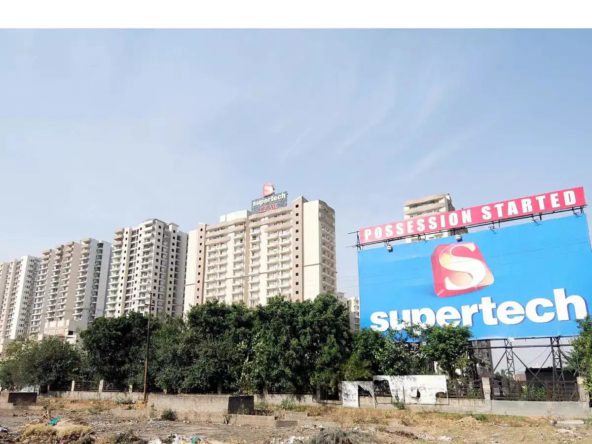
Height limits have been largely removed in the new draft. Restrictions will now apply only within aviation safety zones or heritage zones. This implies that the development of high- rise towers in areas like Noida and Greater Noida will increase, thereby defining the future urban skyline.
The new draft Unified Building Code also provides clear guidelines regarding open spaces. Projects exceeding 3,000 square meters in size must reserve land for parks and open areas. Specifically, it will be mandatory to allocate 15% of the total area for open space in residential projects, and 10% in non- residential projects.
The draft is currently available on the Nivesh Mitra portal for public feedback. For a period of 15 days, individuals may submit their suggestions or raise objections regarding it. This can be done either by visiting the Authority’s office in person or via email. Officials state that the final version will be implemented following the feedback process.
This draft Unified Building Code from UP is emerging as a major reform. It will not only simplify regulations but also modernize and future- proof the entire property development ecosystem. In the times to come, its direct impact will be seen on urban growth, infrastructure planning, and housing supply.